
How the City of Greer, SC Maintains 10 Times More Streets With Pavement Preservation
Greer, South Carolina, sits at the heart of the Upstate region, roughly halfway between Atlanta and Charlotte. Straddling the line between Greenville and Spartanburg counties, Greer has transformed from a small railroad town into one of the fastest-growing cities in the country, fueled by its proximity to BMW’s only U.S. manufacturing plant, Interstate 85, and the Greenville-Spartanburg International Airport. As one of the fastest-growing cities in the area, Greer is seeing more drivers, more subdivisions, and more pressure on the city’s roads.
The Problem
Like every growing city, Greer has a limited amount of funds for road maintenance and a long list of streets competing for that money. Waiting until roads fail and require full reconstruction would mean spending enormous sums on just a handful of street segments each year while the rest of the network slowly deteriorates. The city needed a way to serve more neighborhoods and more taxpayers with the same budget.
The Solution
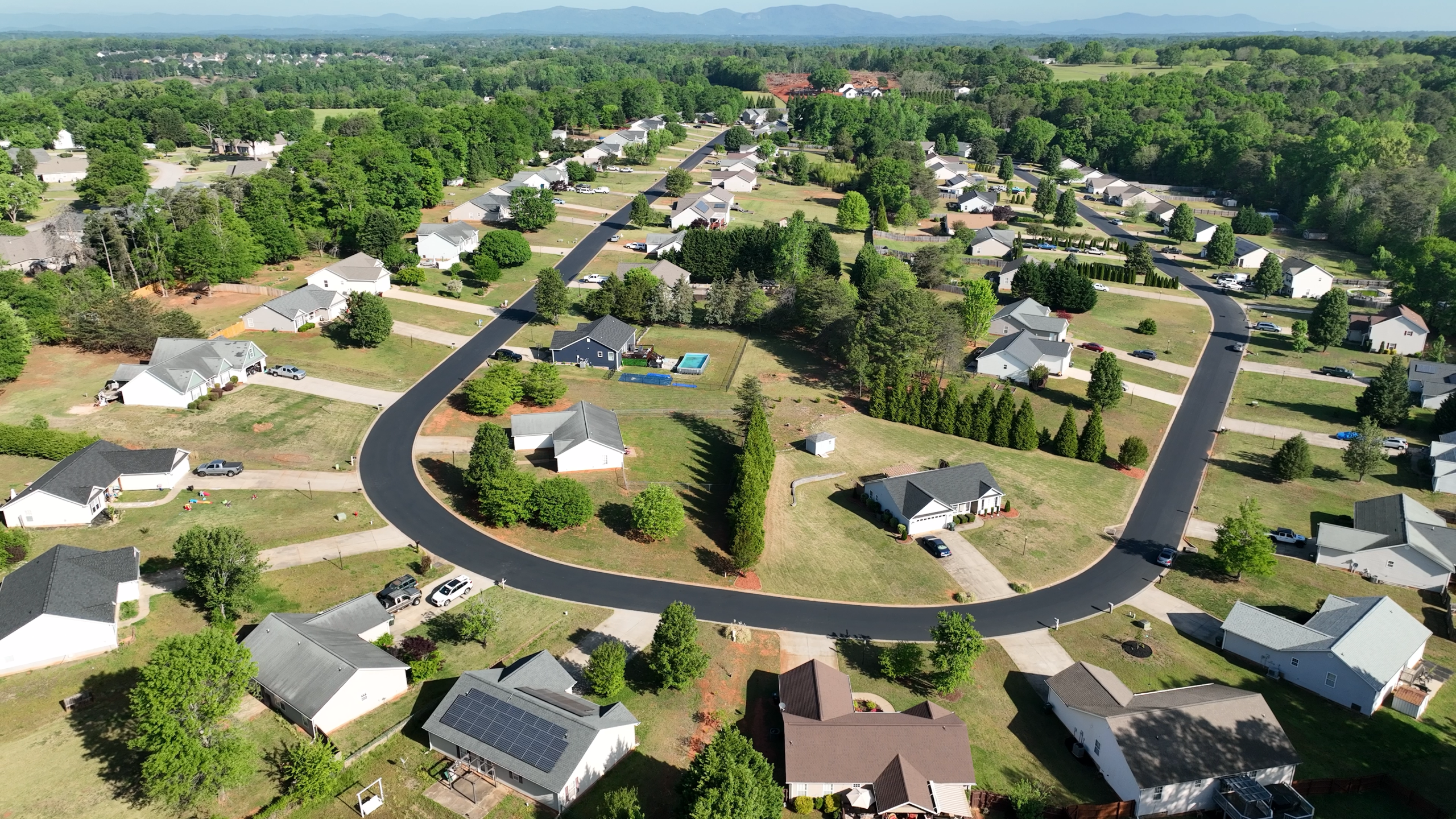
Greer adopted a proactive pavement preservation program anchored by HA5 High Density Mineral Bond. By treating roads while they’re still in good condition, the city extends pavement life at a fraction of the cost of reconstruction. “We’re able to treat probably 10 times as many roads with HA5 as we would with just a full reconstruction,” said Nathan Jackson, Assistant City Engineer for the City of Greer. “That’s a lot more taxpayers that are feeling the benefit.”
Keeping Good Roads Good
Greer’s strategy reflects a best-first approach to pavement preservation, one that engineering studies have repeatedly shown to be far more cost-effective than waiting for roads to fail. “We want to keep our good roads good,” Jackson said.
“We understand the cost benefit of doing pavement preservation versus waiting until the roads need a full reconstruction.”
The math is straightforward. Interventions at the end of a road’s life are the most expensive, and a city that pours its entire budget into reconstructing its worst streets watches every other road in the network slide toward the same fate.
By preserving roads while they’re still in good condition, Greer is able to treat more roads with the same budget. “With pavement preservation, we can treat a lot more subdivisions,” Jackson said. “We can help a lot more taxpayers with their roads versus just focusing on small segments that we’re doing full reconstruction on.”
A Data-Driven Approach Built on PCI
Greer’s engineering team manages its network using the Pavement Condition Index (PCI), a standard 0-to-100 scale for rating road health. “We usually expect to see two to three PCI loss per year,” Jackson explained. Left untreated, that decline follows a steep downward curve until reconstruction is the only option left.
Preservation treatments interrupt that curve. “As the PCIs drop with aging, we want to do the pavement preservation to give it a bump and get it close to the peak again, versus just the parabolic curve going back down to zero,” Jackson said. “With pavement preservation, as we give it a bump with each treatment, we might have some other tools that we can use along the way before we get to reconstruction.”
The city has clearly defined where each tool belongs. “We have already started treating with HA5 in the 70 to 90 PCI range,” Jackson said. “And then we do crack fill prior to the HA5 treatment. Below 50 is when we’re doing our mill and fill and full reconstruction.”
That layered approach, crack sealing, HA5 High Density Mineral Bond on good roads, and heavier rehabilitation reserved for roads that truly need it, is exactly how a well-built pavement preservation toolbox is supposed to work.
Winning Over the City Council
Having a plan is one thing. Getting the support necessary to execute that plan is another. And public acceptance matters for more than curb appeal.
For elected officials, constituent phone calls are a primary source of feedback on public works decisions. “When we presented last year with the pavement preservation list, the council only had good things to say about our methods and the tools that we’re using,” Jackson said. “Like us, they’re not getting calls with complaints about this treatment. And that’s their biggest source of information, calls from their constituents.”
Consistency has made the annual budget conversation easier every year. “It made the approval much easier as we go year after year with the same treatments,” Jackson said. “The council members know what to expect. They know that taxpayer dollars are being stretched as far as possible and that we shouldn’t have any complaints.”
How Greer Structures Their Preservation Budget
Greer dedicates a fixed share of its paving program to keeping good roads good. “For our paving program, 25% of that goes towards pavement preservation, and that includes full depth patching, crack seal, and also the HA5 treatment,” Jackson said. “That was a number that was given to us during the APWA convention, and it’s a number that we’ve just adopted.”
The formula has allowed the city to keep pace on two fronts at once. “We’ve been able to keep up with the amount of new roads that we have coming in that are good candidates for these pavement preservation treatments, and also keep up with our backlog,” Jackson said. For one of the fastest-growing cities in the region, absorbing new subdivision streets while chipping away at older roads is no small feat.
Advice for Other Municipalities
For public works and engineering professionals considering HA5, Jackson recommends starting with two conversations. “I’d recommend talking with Holbrook. I’d also recommend they reach out to other municipalities that have used the product,” he said. “Ask them where they started using it on their PCI range and what adjustments they’re making, where that lines up with their other tools of treatments. I understand some municipalities are treating with HA5 right off the bat as soon as it’s paved. So you can glean information from them, and you might be able to get a full picture of where to use this treatment.”
His bottom line is simple: “I would recommend HA5.”
Stretch Your Road Budget Further
Roads are among the most expensive assets a city owns, and every year of life you add to them is money back in your taxpayers’ pockets. To learn how HA5 High Density Mineral Bond can fit into your pavement preservation program, contact a Holbrook Asphalt representative today. Want to see more real results from cities like Greer? Explore our customer experiences.
Related Case Studies
Fayette County is one of Georgia’s leading municipalities when it comes to preserving asphalt assets. Learn how they’ve embraced a culture of innovation to lower costs for taxpayers.
After discovering HA5 High Density Mineral Bond through a neighboring county, Walton County implemented a “best-first” approach, treating newer pavements to prevent deterioration rather than waiting for failure.