

Streets Last Longer and Cost Less in Hondo, Texas
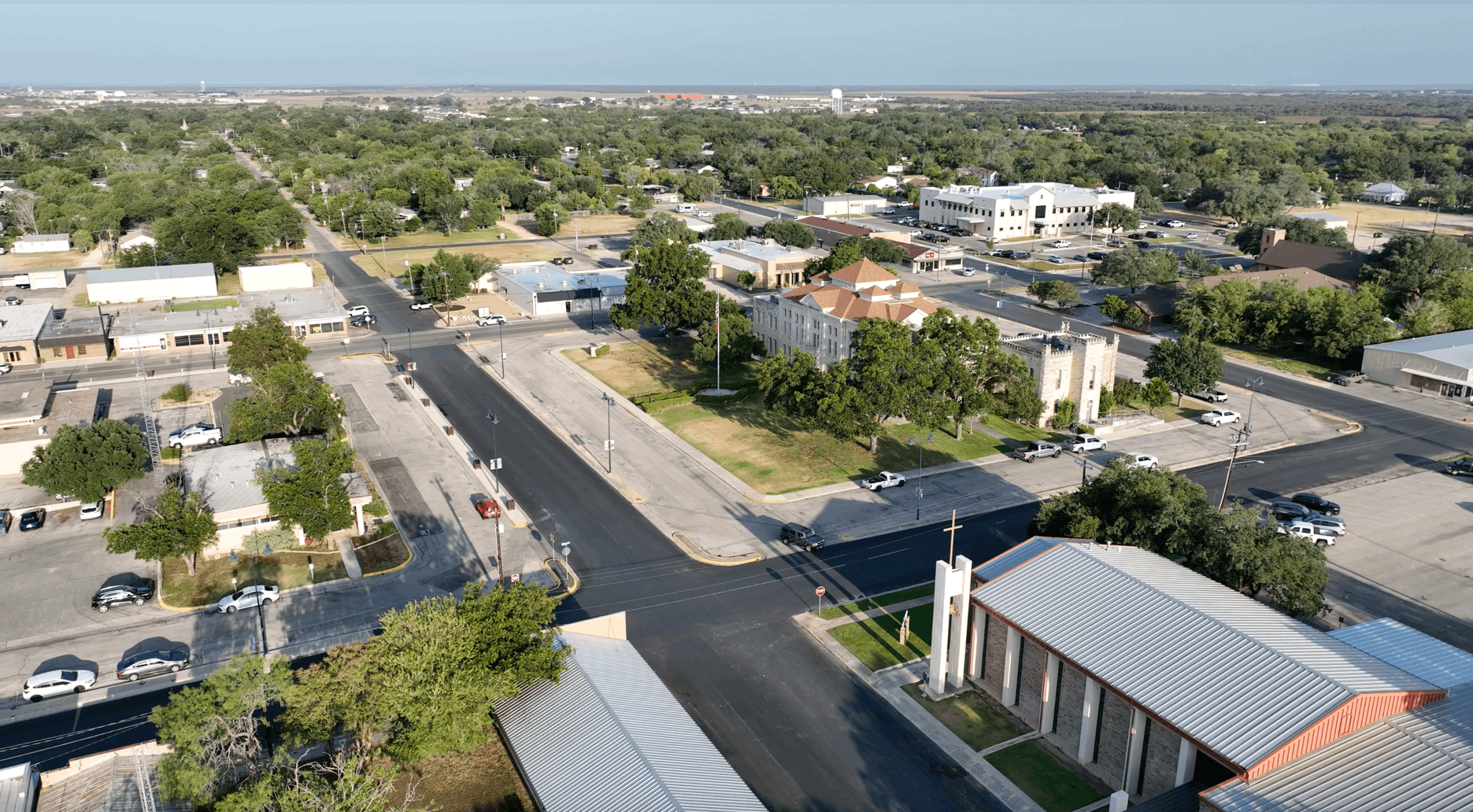
Located 40 miles west of San Antonio on U.S. Highway 90, sits Hondo, Texas. It’s a small Texas city with a unique position. It’s close enough to San Antonio to benefit from the big city amenities, but far enough away that residents still enjoy the outdoor activities and sense of community that come with living in a small town.
Like thousands of cities its size, Hondo is working through a backlog of deferred infrastructure maintenance while its budget stays flat and material costs keep climbing. City Manager John Naron inherited that backlog, and the way he handled the street portion of it offers a useful model for any city trying to cover a large network with a small budget.
The Problem
Hondo was paying the price for years of deferred maintenance across its streets, water lines, and sewer lines. A reactive approach had put the city in a position where catching up was no longer realistic, particularly with flat budgets and rising construction costs. The city’s street maintenance program was extending pavement life, but it wasn’t producing a surface residents were happy to see on their streets.
The Solution
Rather than starting from scratch, Hondo built on their program by adding HA5 High Density Mineral Bond over existing surface treatments. HA5 locked the surface down and delivered a finish residents mistook for new pavement. Three years later, Naron credits HA5 as the primary reason the city’s Pavement Condition Index score increased and now sits between 70 and 75.
Hondo’s Deferred Maintenance Challenge
Naron doesn’t frame Hondo’s situation as unique. “The biggest challenge, and I think this is for most cities right now in the United States, is just overcoming the deferred maintenance of all of our infrastructure,” he said.
The financial pressure works against the city from both directions. Budgets are staying flat or growing only slightly, while the cost of construction and materials continues to rise. This reality highlights a challenge cities across the country face every day. Citizens want low taxes and improved services, but these desires are at odds with the realities cities and counties have to deal with. As Naron put it, “That sounds great, but in reality, there’s a trade-off and a cost for everything.”
The trade-off eventually takes its toll. “Being reactive has led us to a point to where we can’t catch up,” he said. That recognition pushed the city toward a proactive posture and toward actively seeking out treatments that could cover more square yardage per dollar than what it had been using.
A Pavement Surface Residents Wanted
When Naron arrived in Hondo, the city had just completed a chip seal project. Chip seal is a legitimate and cost-effective treatment, and it belongs in a city’s preservation toolbox for high-traffic and moderately distressed roads. Its weakness isn’t durability, it’s public acceptance. “Chip seal is a great product, but at the same time, it’s not very popular,” Naron said. “Everyone who’s done anything in streets knows this.”
Before arriving at Hondo, Naron had prior experience with HA5 from visiting cities around Texas, where he walked roads, seeing HA5 applications that were three, five, seven, and even ten years old, and saw how the treatment held up over time. Working with Holbrook Asphalt, the city applied HA5 over the chip seal on its first project about three years ago.
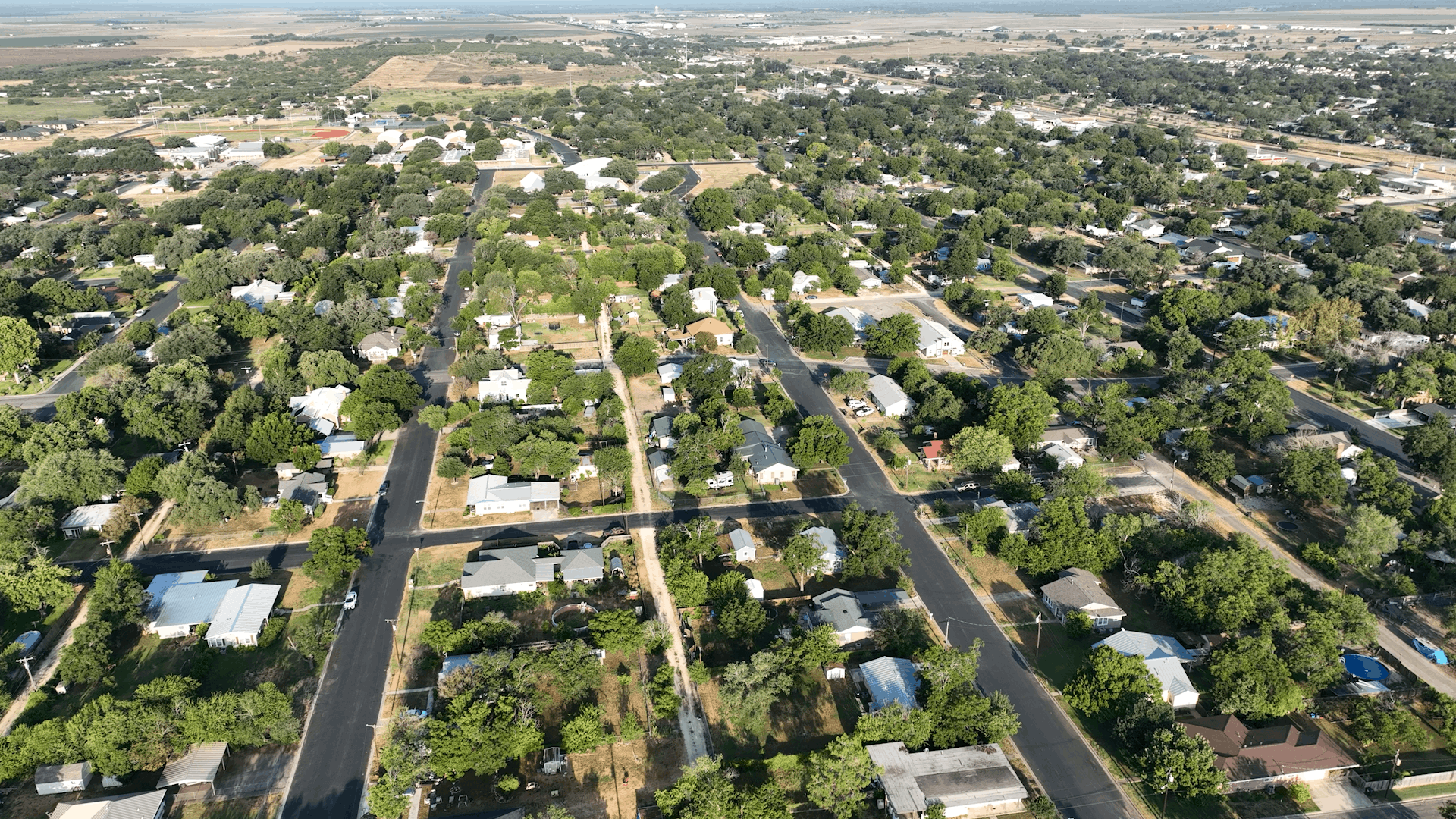
The reaction was immediate. “People thought we were paving,” Naron said. “They were like, ‘Wow, these roads look great.’ It locked everything down. The citizens love the look.” The performance held up alongside the appearance, and today the city estimates its PCI at 70 to 75, an outcome Naron attributes mostly to HA5. He notes the roads look better than most small towns in Texas, and the city achieved that without pouring new asphalt or concrete.
Why HA5 Protects Asphalt Longer
HA5 High Density Mineral Bond works by blocking the two forces that age asphalt fastest. Asphalt is a flexible material made of aggregate held together by a petroleum-based binder, and that flexibility is what allows it to carry traffic loads without cracking. UV radiation evaporates the vital oils in the binder while moisture intrusion separates the binder from the aggregate, and the combined effect is oxidation that leaves the pavement brittle. Once asphalt loses its flexibility, there’s no going back. Cracks and potholes can follow quickly without intervention.
HA5 uses a specialized non-ionic emulsion that repels water and shields the surface from UV exposure, keeping those vital oils in the pavement and delaying oxidation by years. Because the emulsion carries a near-neutral charge, it accommodates fine aggregates that produce a smooth, uniform finish rather than the grainy residue or loose chips associated with other treatments. That combination of protection and appearance is why HA5 works so well as a wearing course over a chip seal.
Earning Council and Community Buy-In
Adopting a new technology always includes a due diligence phase. John had seen HA5 around Texas, but in order to get the project through city council, they needed to understand the benefits of HA5 and the positive impact it would have on Hondo and its residents. He told them plainly that he knew he was the new guy, that he had seen the product perform in several different places, and that he believed it would solve the city’s issue. The finished project closed the argument. When council members saw the result alongside the price, the conversation was over.
Naron sees streets as one of the most efficient ways a city manager can build credibility with both the council and the public. “If you show your citizens where their tax dollars are going and you take care of their issues, they’re going to allow you to do the things that you need to do,” he said. “You’ve got to gain the trust of citizens and you’ve got to gain the trust of the council. In a way, streets can be low-hanging fruit to do that.”
That credibility carries over to other infrastructure projects that aren’t as visible. Water and sewer replacement is expensive, disruptive, and invisible once it’s finished, which can make it difficult for residents to buy in. Naron has found that visible wins on the street network buy him room to do the underground work. Residents who watched the city maintain their roads have more trust, and are more willing to let the city “cook” as John puts it.
The Application Process
For Hondo, the installation experience mattered as much as the product. Naron pointed to the level of safety on the jobsite, the traffic control, and the way Holbrook’s project managers interact with residents directly rather than routing every question back to city hall. Crews are willing to take the call and talk a resident through what’s happening instead of treating it as a city problem.
Most resident frustration comes from not knowing what to expect. Once residents learn the work will take a day rather than a week and then see the finished surface, the questions turn into compliments. Naron was impressed with Holbrook’s ability to not only listen to resident concerns, but to de-escalate the situation and help residents understand the benefit of the project. “The project managers are not afraid to address a citizen and say, ‘Hey, let me use a little bit of de-escalation here. Let me talk to you about it,'” he said. “Most of the time, that’s what citizens want to know. They just want to know what’s going on. Holbrook does a great job of that, being willing to accept the call and not just passing it off to, hey, that’s a city problem.”
What John Recommends to Other Cities
Naron’s advice to other city managers is specific and easy to follow. “Call Holbrook, find out what cities in your area have used HA5,” he said. “Take your council with you and actually get out there and walk the pavement. Get out of your vehicle. Look at it when it’s first done. Go find a street that’s been there three years, find a street that’s at five, find a street that’s been there seven years, and look at it. That will tell you your future.”
From there, build the case in terms your council already understands. Measure your streets, calculate your square yardage, and get a rough estimate. Then show the council how much road they can treat with HA5 compared to how much they can repave for the same money. Naron believes the difference in that comparison is what earns buy-in.
He also recommends starting small. A limited first project lets residents experience the communication, see the product, and judge the finish for themselves. In Hondo, that first project generated its own demand. The city now regularly hears residents asking when the crews are coming to put “that black stuff” on their road.
Stretch Your Street Budget Further
With this project, Hondo took a major step towards solving the deferred maintenance John brought up as the city’s biggest challenge. Hondo has effectively stopped the street portion of that backlog from growing, at a cost well below what paving would have required, on a network residents now compliment instead of complain about. “HA5 is a very economical way to save your streets and also allow you to create a maintenance plan,” Naron said.
If your city is managing a flat budget, rising costs, and a road network slipping faster than you can fund it, contact Holbrook Asphalt or schedule a consultation.
Related Case Studies
Hurst, Texas, under the leadership of Assistant City Manager Clayton Fulton, knew that they needed to properly maintain their infrastructure if they wanted to build a thriving community. Click to hear Hurst’s story.
Georgetown, Texas is located just 30 miles north of Austin and is well known for its architecture and natural beauty. The city recently underwent an expansion of its road network, adding massive pressure to their public works team. Hear how they coped with the increased demand.